
The more Garmin CIRQA leaks, the more I’m convinced it’s built for Garmin fans
Update (July 20, 2026): New information spotted on Garmin’s own product database hints that the CIRQA could launch for around $200 instead of the initial rumored $509 price. I’ve updated this article to reflect what that means for buyers.
I’ve always thought of screenless fitness trackers as the healthy antidote to smartwatch overload—the kind of device you wear when you want the data, but not the noise. So when the Garmin CIRQA leaks started circulating online, I assumed it was just another entry in the growing list of “coming soon” screenless wearables we’ve been seeing lately.
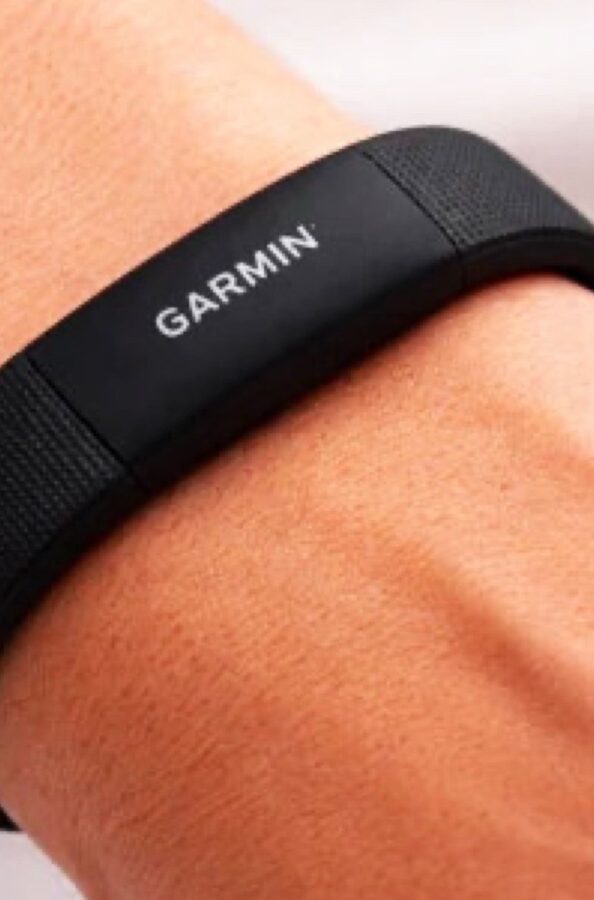
At first glance, the Garmin CIRQA leak looked exactly like what you’d expect from Garmin entering this space: a minimal, screen-free wearable focused on continuous health tracking. Heart rate, sleep, activity—all the usual passive metrics, without the display.
But the more details that surface, the more I think I had the wrong frame entirely.
What the Latest Garmin CIRQA Leaks Actually Tell Us

Let’s get our bearings. The Garmin CIRQA is shaping up to be a screenless wrist wearable for 24/7 passive health tracking. Earlier leaks from Garmin’s own website pointed to two sizes and two color options (Black and French Gray), while a Singapore regulatory filing pointed to Bluetooth-only connectivity—no built-in GPS, ANT+, Wi-Fi, or cellular support.
Later, a romanian Garmin support page briefly listed the “CIRQA smart band” as compatible with the Health Status feature in Garmin Connect — but a short time later, the reference was removed. It was the second time Garmin accidentally published information about the wearable on its own website, and a strong indicator of an upcoming release.
The Price Might Actually Make Sense
This weekend, we got the biggest surprise yet: the rumored $509 price may have been wrong all along.
According to NotebookCheck, citing price information discovered in Garmin’s product database by Reddit user Chipmux, the CIRQA appears to have a suggested retail price of about $200. For now, Garmin hasn’t confirmed those numbers, but they come from a stronger source than the earlier retailer listing.
If that information proves accurate, it completely changes how I look at the CIRQA. Instead of basically becoming its own category, the new wearable competes directly against devices like the Polar Loop, Fitbit Air, and Amazfit Helio Strap.
Suddenly, Garmin’s strategy makes a lot more sense.
But Wait—Is the Garmin CIRQA Even Trying to Compete With WHOOP?

Here’s the shift I keep coming back to. Earlier, I evaluated the CIRQA like it was supposed to go head-to-head with the Fitbit Air, or the Amazfit Helio Strap (both $99.99), or even the Polar Loop at $199.
But the more I sit with the Bluetooth-only spec, the ecosystem angle, and the rumored focus on automatic workout recognition, the less I think Garmin is pitching this to someone who’s never owned a Garmin product. The CIRQA may not be a WHOOP alternative at all. It might be an accessory—designed specifically for people who already own a Garmin watch and want something more from their data.
Think about the actual use case described in early reports: wear a Garmin smartwatch on one wrist, wear the CIRQA on the other, and the two devices work together for better workout tracking. That’s a pitch to someone who’s already deep in the Garmin Connect ecosystem and wants to fill in the gaps their watch misses.
The Case for a Companion Device
This framing actually makes a lot of sense once you think through how people live with their smartwatches.
24/7 wearability is harder than it sounds. Most people take their watch off at some point—charging, sleeping, recovery days. A screenless band is much easier to wear continuously. No interface to manage, or battery anxiety. No awkward bulk during a rest day.
Sleep tracking improves when the device never comes off. Garmin watches already do solid sleep tracking, but there’s always that gap when the watch is charging overnight. A dedicated wristband built for passive overnight tracking solves that.
The two-device case during training. Wearing both gives you more data points from both wrists —something that could meaningfully improve optical heart rate accuracy during high-intensity intervals, and give Garmin’s algorithms more to work with when auto-detecting workout starts and ends. That last part, reliable automatic workout detection, is something Garmin has been iterating on for years.
This isn’t a new concept entirely—WHOOP has long been worn alongside GPS watches by athletes who want recovery data without giving up their preferred training device. But Garmin has a structural advantage here: roughly 45 million active Garmin Connect users, many of them sitting on years of health and training data that’s already on the platform. For that audience, CIRQA would be an extension of the same system.
The Trademark Trail Still Matters
At this point, trademark filings aren’t our biggest indicators, but they still help complete the picture. Garmin has filed for the CIRQA name in the U.S., Canada, and Europe. The filings describe the CIRQA as a body-worn device that measures physiologica data, recovery, alertness, and performance.
The language is broad, so it doesn’t tell us exactly what the CIRQA can do. But it does fit everything we’ve seen elsewhere: a screenless wearable that complements Garmin’s ecosystem—not something that replaces one of its watches.
Launch Still Feels Close
Despite the missed mid-July prediction, I still think the CIRQA is close to launch.
Earlier this month, Geeky Gadgets, citing analysis from TechAvid, reported that Garmin had received FCC authorization alongside a 180-day confidentiality request covering documents such as the user manual and product photos. While some expected that timeline to point to a mid-July announcement, Garmin hasn’t made any official, yet.
Even so, I don’t think the general picture has changed. Between the Bluetooth certification in Singapore, international trademark filings, and now pricing from Garmin’s own product database—the CIRQA evidence is real.
We may be very close to a launch.
I Think I finally Understand What Garmin is Building
The most interesting question is what Garmin wants this wearable to be. With every leak, I’m more convinced that it’s a fitness band designed to work in tandem with Garmin’s existing watches. If that’s the strategy, CIRQA will appeal mostly to Garmin customers.
If that’s the strategy, I don’t think Garmin is trying to win over WHOOP users at all. It’s giving Garmin customers another reason to stay. And if Garmin really can deliver that for around $200 instead of $500, the CIRQA becomes quite a compelling buy.
Responses (1)
- Dan


